Psoriasis: A Naturopathic Guide to Causes, Symptoms, Immune Function, Inflammation, Nutrition, Skin Health and Integrative Management
Psoriasis is a chronic, immune-mediated inflammatory condition that primarily affects the skin but may also involve the nails, joints and other aspects of health.
It is characterised by an accelerated process of skin-cell turnover and persistent inflammatory activity, which can lead to thickened, scaly, inflamed patches of skin.
Psoriasis affects millions of people worldwide and can develop at almost any age.
Although it is often recognised by its visible skin manifestations, psoriasis is more than a cosmetic or superficial dermatological problem.
It is associated with complex interactions between genetic susceptibility, immune signalling, environmental influences and lifestyle-related factors.
The condition may also be associated with psoriatic arthritis, cardiovascular risk factors, metabolic disorders and psychological distress.
Psoriasis is not contagious and cannot be transmitted through physical contact.
The severity and distribution of symptoms vary considerably between individuals.
Some people experience small, localised plaques, while others develop widespread inflammation affecting large areas of the body.
Periods of improvement and worsening are common.
Some individuals achieve prolonged periods of remission, but there is currently no established permanent cure.
Modern dermatology offers several effective treatments, including topical therapies, phototherapy, systemic medicines and biologic treatments.
From a naturopathic and integrative perspective, interest has also developed in the potential roles of nutrition, weight management, stress reduction, sleep, skin-barrier care and selected nutritional interventions.
However, an important distinction must be made between approaches that improve general health or support symptom management and treatments that have been demonstrated to control psoriasis itself.
Dietary supplements, herbal preparations and lifestyle interventions should not be presented as substitutes for clinically indicated psoriasis treatment.
A responsible integrative approach combines evidence-based dermatological care with individualised attention to overall health, lifestyle and wellbeing.
In this guide, you will learn:
- What psoriasis is.
- How psoriasis develops.
- The role of the immune system.
- Genetic and environmental factors.
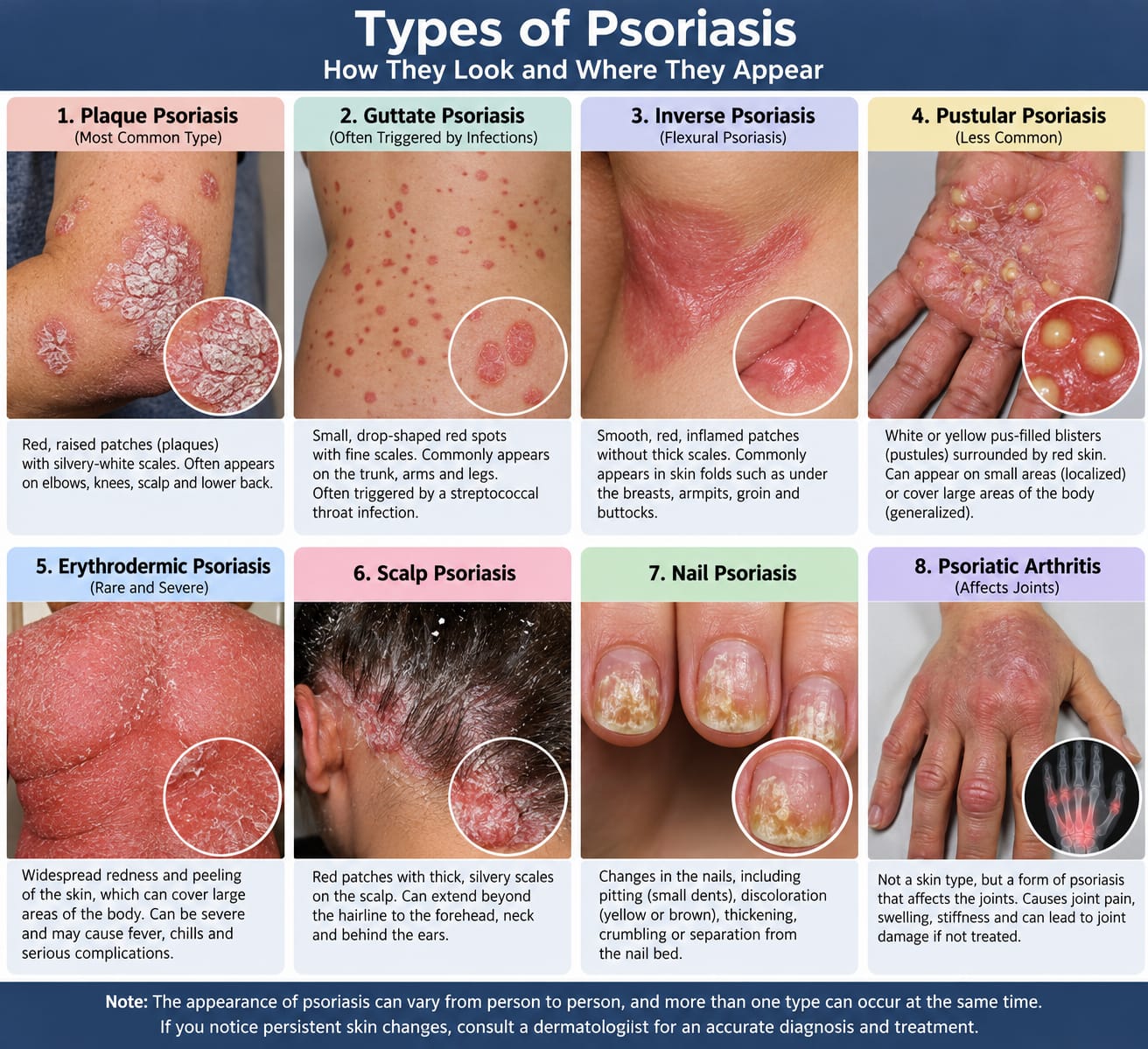
- Different types of psoriasis.
- Common symptoms.
- Psoriasis and the skin barrier.
- Psoriasis and inflammation.
- Psoriasis and psoriatic arthritis.
- Psoriasis and cardiovascular health.
- Psoriasis and metabolic health.
- Psoriasis and obesity.
- Psoriasis and gut health.
- Psoriasis and the gut microbiome.
- Psoriasis and nutrition.
- Psoriasis and gluten.
- Psoriasis and vitamin D.
- Psoriasis and omega-3 fatty acids.
- Psoriasis and zinc.
- Psoriasis and antioxidants.
- Psoriasis and stress.
- Psoriasis and sleep.
- Psoriasis and smoking.
- Psoriasis and alcohol.
- Psoriasis and skin care.
- Psoriasis and natural oils.
- Psoriasis and herbal preparations.
- Conventional medical treatments.
- Integrative and naturopathic management.
- Frequently asked questions.
- Practical considerations.
- Scientific references.
What is Psoriasis?
Psoriasis is a chronic inflammatory disease in which immune-system activity contributes to changes in skin-cell production and maturation.
In healthy skin, epidermal cells are continuously produced, mature and are eventually shed from the surface.
In psoriasis, inflammatory signalling accelerates this process.
Skin cells accumulate more rapidly than they can be shed, contributing to the formation of thickened plaques and visible scaling.
These changes are accompanied by inflammation within the skin.
Psoriasis is commonly classified as an immune-mediated inflammatory disease.
It involves dysregulated immune pathways rather than simply an overproduction of skin cells.
The condition is not caused by poor hygiene.
It is also not an infectious disease.
Psoriasis can affect physical comfort, sleep, self-confidence, social relationships and quality of life.
How does Psoriasis develop?
Psoriasis develops through interactions between genetic susceptibility, immune dysregulation and environmental influences.
A central mechanism involves the activation of immune pathways that promote inflammation in the skin.
Certain immune cells release signalling molecules known as cytokines.
These cytokines influence other immune cells and skin cells, creating a cycle of inflammatory activity.
Important pathways include those involving:
Tumour necrosis factor-alpha (TNF-alpha).
Interleukin-17 (IL-17).
Interleukin-23 (IL-23).
Other inflammatory mediators.
These pathways are clinically important because several modern psoriasis treatments specifically target them.
However, psoriasis is not caused by a single cytokine, nutrient deficiency, toxin or lifestyle factor.
It is a multifactorial condition.
Psoriasis and the Immune System
The immune system protects the body against infections and other threats.
In psoriasis, immune signalling becomes dysregulated, contributing to persistent inflammation.
The IL-23 and IL-17 pathways are particularly important in the development of plaque psoriasis.
These pathways influence inflammatory activity and the behaviour of skin cells.
The effectiveness of biologic treatments targeting these pathways provides strong clinical evidence of their importance.
However, psoriasis should not be described simply as an immune system that is too strong or too weak.
The problem involves inappropriate regulation of particular immune responses.
Consequently, products marketed as immune boosters are not automatically appropriate for people with psoriasis.
Psoriasis and genetic factors
Genetic susceptibility plays an important role in psoriasis.
People with a family history of psoriasis have an increased likelihood of developing the condition.
Research has identified several genetic regions associated with psoriasis risk.
One important association involves the HLA-C*06:02 genetic variant.
However, carrying a genetic susceptibility factor does not mean that psoriasis will necessarily develop.
Environmental exposures, immune responses and other biological influences also contribute.
Psoriasis therefore cannot be explained entirely by genetics.
What can trigger Psoriasis?
Psoriasis symptoms may worsen following certain exposures or physiological changes.
Potential triggers include:
Psychological stress.
Skin injury.
Certain infections.
Smoking.
Heavy alcohol consumption.
Some medications.
Changes in treatment.
Other individual environmental factors.
A skin injury may sometimes lead to the development of psoriasis lesions in the affected area.
This phenomenon is known as the Koebner phenomenon.
Certain infections, particularly streptococcal infections, may be associated with guttate psoriasis.
Not every person experiences the same triggers.
Identifying individual patterns may be useful, but psoriasis should not be attributed to a single trigger without appropriate evidence.
What are the main types of Psoriasis?
Psoriasis can appear in several clinical forms.
The appearance, location and severity may differ.
Plaque Psoriasis
Plaque psoriasis is the most common form.
It produces well-defined, thickened, scaly plaques.
Common locations include:
Elbows.
Knees.
Scalp.
Lower back.
Other areas of the body.
On lighter skin, plaques may appear pink or red with silvery-white scale.
On darker skin, lesions may appear violet, brown or darker than the surrounding skin, sometimes with greyish scale.
Guttate Psoriasis
Guttate psoriasis produces numerous small, drop-shaped lesions.
It may develop after certain infections, particularly streptococcal throat infections.
It is more frequently seen in children and younger adults.
Inverse Psoriasis
Inverse psoriasis affects skin folds.
Common locations include the armpits, groin and areas beneath the breasts.
Lesions may appear smooth and inflamed, with less obvious scaling because of moisture and friction.
Pustular Psoriasis
Pustular psoriasis involves sterile, pus-filled lesions associated with inflammation.
It may be localised or widespread.
Generalised pustular psoriasis can be a serious medical condition requiring urgent assessment.
Erythrodermic Psoriasis
Erythrodermic psoriasis is a rare but potentially life-threatening form involving extensive inflammation across much of the skin.
It may interfere with temperature regulation and fluid balance.
Urgent medical care is required.
Nail Psoriasis
Psoriasis may also affect the fingernails and toenails.
Possible changes include:
Nail pitting.
Discolouration.
Thickening.
Separation of the nail from the nail bed.
Accumulation of material beneath the nail.
Nail changes may also occur with fungal infections or other conditions, so appropriate diagnosis is important.
Common symptoms of Psoriasis
Symptoms vary depending on the type and severity of psoriasis.
Common manifestations include:
- Thickened skin plaques.
- Scaling.
- Redness or other changes in skin colour.
- Itching.
- Burning sensations.
- Skin tenderness.
- Cracking.
- Occasional bleeding.
- Nail changes.
- Sleep disruption.
- Emotional distress.
Some people experience relatively mild symptoms.
Others experience substantial discomfort and impaired daily functioning.
The visible extent of psoriasis does not always reflect the full impact of the condition.
Psoriasis and the skin barrier
The skin barrier helps protect the body against environmental exposures and excessive water loss.
It is formed by the outer layers of the skin and their associated lipids and structural proteins.
In psoriasis, inflammation and altered epidermal maturation can affect normal barrier function.
This may contribute to dryness, scaling, irritation and discomfort.
Appropriate moisturising can help support skin-barrier function and reduce dryness.
However, moisturisers do not directly replace the anti-inflammatory effects of prescribed psoriasis treatments.
Skin-barrier care should be considered supportive rather than curative.
Psoriasis and chronic inflammation
Inflammation is central to psoriasis.
Inflammatory cytokines influence skin-cell behaviour and contribute to the formation of plaques.
Psoriasis is also associated with systemic inflammatory activity, particularly in more extensive disease.
This has encouraged research into relationships between psoriasis and other inflammatory or metabolic conditions.
However, systemic inflammation cannot be reliably assessed using non-validated wellness scans or measurements alone.
Clinical evaluation should be based on medical history, examination and appropriate investigations.
Psoriasis and Psoriatic Arthritis
Psoriatic arthritis is an inflammatory joint condition associated with psoriasis.
It can affect joints, tendons and other musculoskeletal structures.
Symptoms may include:
Joint pain.
Joint swelling.
Morning stiffness.
Swollen fingers or toes.
Heel pain.
Reduced mobility.
Persistent back pain.
Psoriatic arthritis may develop before, after or around the same time as skin psoriasis.
Early recognition is important because untreated inflammation can cause irreversible joint damage.
People with psoriasis who develop persistent joint symptoms should receive medical assessment.
Psoriasis and Cardiovascular Health
Psoriasis, particularly when severe, is associated with an increased prevalence of certain cardiovascular risk factors.
These may include:
Hypertension.
Dyslipidaemia.
Obesity.
Diabetes.
Smoking.
Metabolic syndrome.
Research also suggests that systemic inflammatory processes may contribute to cardiovascular risk.
However, the relationship is complex and influenced by several factors.
People with psoriasis should receive appropriate assessment and management of cardiovascular risk.
Psoriasis treatment should not replace conventional cardiovascular prevention.
Psoriasis and Metabolic Health
Metabolic health involves the regulation of blood glucose, blood lipids, blood pressure and energy balance.
Psoriasis is associated with a higher prevalence of several metabolic conditions.
These include obesity, type 2 diabetes and metabolic syndrome.
The relationships may involve shared inflammatory mechanisms, genetics, lifestyle and other factors.
However, psoriasis does not automatically mean that a person has insulin resistance or metabolic disease.
Appropriate clinical assessment is required.
Psoriasis and Obesity
Obesity is associated with an increased risk of developing psoriasis and may be linked with greater disease severity.
Adipose tissue is biologically active and participates in inflammatory signalling.
In people who are overweight or living with obesity, weight management may improve general health and can sometimes support better psoriasis outcomes.
However, weight loss is not a cure for psoriasis.
Weight management should be individualised and approached without stigma.
Psoriasis and Gut Health
Interest in the relationship between psoriasis and gastrointestinal health has increased.
The digestive tract and immune system interact through complex biological mechanisms.
Researchers have investigated possible connections between intestinal inflammation, microbial composition and systemic immune activity.
However, it has not been established that psoriasis is caused by poor digestion, intestinal permeability or an imbalance of gut bacteria.
Persistent gastrointestinal symptoms require appropriate medical evaluation.
Psoriasis and the Gut Microbiome
The gut microbiome consists of microorganisms living within the gastrointestinal tract.
These microorganisms participate in digestion, metabolism and immune regulation.
Some studies have identified differences in gut microbial composition between people with psoriasis and people without psoriasis.
However, these findings do not establish causation.
There is currently insufficient clinical evidence to recommend a particular probiotic strain or microbiome treatment as a standard therapy for psoriasis.
A varied diet containing fibre-rich plant foods may support general digestive health.
Psoriasis and Nutrition
Nutrition is an important component of general health.
A balanced dietary pattern can support cardiovascular health, metabolic regulation and adequate nutrient intake.
For people with psoriasis, nutritional approaches may be particularly relevant when obesity, diabetes, cardiovascular risk factors or nutritional deficiencies are present.
A generally healthy dietary pattern may include:
- Vegetables.
- Fruits.
- Whole grains.
- Legumes.
- Nuts.
- Seeds.
- Fish.
- Appropriate protein sources.
- Unsaturated fats.
However, no single diet has been demonstrated to cure psoriasis.
Dietary changes should complement rather than replace medical treatment.
Psoriasis and the mediterranean diet
The Mediterranean dietary pattern emphasises vegetables, fruits, legumes, whole grains, nuts, olive oil and fish.
It is associated with established cardiovascular and metabolic health benefits.
Observational research has investigated whether greater adherence to this dietary pattern is associated with lower psoriasis severity.
However, observational associations cannot establish that the diet directly treats psoriasis.
The Mediterranean diet may be a reasonable nutritional approach because of its broader health benefits.
It should not be presented as a specific cure for psoriasis.
Psoriasis and Gluten
Gluten is a protein found in wheat, barley and rye.
Some people with psoriasis also have coeliac disease or other gluten-related conditions.
For individuals with confirmed coeliac disease, a strict gluten-free diet is medically necessary.
However, there is insufficient evidence to recommend gluten elimination routinely for every person with psoriasis.
Unnecessary dietary restrictions may reduce nutritional variety and increase the risk of inadequate nutrient intake.
People with symptoms suggestive of coeliac disease should seek appropriate testing before removing gluten from their diet.
Psoriasis and Vitamin D
Vitamin D plays important roles in bone health, immune function and other physiological processes.
Vitamin D-related pathways are relevant to skin biology.
Certain topical vitamin D analogues, such as calcipotriol, are established treatments for plaque psoriasis.
However, topical vitamin D analogues are not equivalent to taking oral vitamin D supplements.
Oral vitamin D supplementation has not been consistently demonstrated to improve psoriasis in people without deficiency.
People with suspected or confirmed vitamin D deficiency should receive appropriate assessment and management.
Excessive vitamin D supplementation can cause toxicity.
Psoriasis and Omega-3 Fatty Acids
Omega-3 fatty acids are found in oily fish and certain other foods.
EPA and DHA are long-chain omega-3 fatty acids involved in physiological processes relevant to inflammation.
Researchers have investigated omega-3 supplementation in psoriasis.
However, clinical findings are mixed, and evidence is insufficient to recommend omega-3 supplements as an established treatment for psoriasis.
Eating fish as part of a balanced diet may provide broader nutritional benefits.
People taking anticoagulant medication or considering high-dose omega-3 supplements should seek professional advice.
Psoriasis and Zinc
Zinc is an essential mineral involved in normal immune function, wound healing and skin physiology.
Zinc deficiency can cause skin-related symptoms.
However, this does not mean that every person with psoriasis has a zinc deficiency.
Clinical evidence does not support routine high-dose zinc supplementation as a treatment for psoriasis.
Excessive zinc intake can cause adverse effects, including copper deficiency.
Supplementation should be based on individual nutritional needs.
Psoriasis and Antioxidants
Antioxidants are substances involved in the regulation of oxidative reactions.
Fruits, vegetables, nuts and other plant foods contain various antioxidant compounds.
Experimental research has explored oxidative stress in psoriasis.
However, antioxidant activity measured in laboratory studies does not establish that antioxidant supplements can treat psoriasis.
A varied, plant-rich diet is generally preferable to relying on high-dose antioxidant supplements without a clear indication.
Psoriasis and Stress
Psychological stress is a recognised trigger or aggravating factor for some people with psoriasis.
Stress can influence sleep, behaviour and physiological signalling.
Living with visible or uncomfortable skin symptoms can also contribute to emotional distress.
This may create a cycle in which stress and psoriasis symptoms influence one another.
Stress-management approaches may include:
Relaxation techniques.
Mindfulness.
Regular physical activity.
Psychological support.
Consistent sleep routines.
Appropriate social support.
These approaches may improve wellbeing and coping.
However, psoriasis is not simply caused by stress, and stress management alone is not an established cure.
Psoriasis and sleep
Sleep disturbance is common among people with psoriasis.
Itching, discomfort, pain and emotional distress can interfere with sleep quality.
Poor sleep may also affect overall wellbeing and the ability to manage chronic disease.
Appropriate treatment of psoriasis symptoms can help address sleep disruption.
Regular sleep routines and good sleep hygiene may provide additional support.
Persistent insomnia or suspected sleep disorders should be assessed appropriately.
Psoriasis and smoking
Smoking is associated with psoriasis risk and may be linked with more severe disease.
Tobacco exposure also increases cardiovascular and respiratory risks.
Smoking cessation is therefore particularly important for overall health.
However, stopping smoking should not be presented as a guaranteed way to eliminate psoriasis.
Professional smoking-cessation support can improve the likelihood of successfully quitting.
Psoriasis and alcohol
Heavy alcohol consumption may be associated with worse psoriasis outcomes and can complicate the management of the condition.
Alcohol can also interact with certain psoriasis medications, particularly those associated with liver-related risks.
Reducing harmful alcohol consumption supports general health.
People taking systemic psoriasis treatments should follow medication-specific advice about alcohol.
Psoriasis and skin care
Appropriate skin care can help reduce dryness, irritation and discomfort.
Useful measures may include:
Regular moisturising.
Gentle cleansing.
Avoiding harsh soaps.
Avoiding excessive scratching.
Using fragrance-free products when appropriate.
Protecting damaged skin.
Following prescribed topical treatment instructions.
Emollients can improve comfort and support the skin barrier.
However, they should not be considered substitutes for anti-inflammatory psoriasis treatments when these are indicated.
Psoriasis and natural oils
Natural oils are sometimes used to moisturise dry skin.
Examples include coconut oil, sunflower oil and other plant-derived oils.
Their effects depend on their composition and the individual's skin tolerance.
Some oils may act as emollients and help reduce dryness.
However, there is insufficient evidence that natural oils independently control the immune-mediated inflammation responsible for psoriasis.
Essential oils may cause irritation or allergic reactions and should not be applied indiscriminately to inflamed or damaged skin.
Psoriasis and herbal preparations
Several botanical ingredients have been investigated in relation to psoriasis.
These include aloe vera, turmeric-derived compounds and other herbal preparations.
Some small clinical studies have reported potentially favourable outcomes with selected products.
However, the evidence is generally limited by differences in formulation, study design, sample size and duration.
Herbal products may also cause adverse reactions or interact with medication.
Natural origin does not guarantee safety or effectiveness.
Herbal preparations should not replace prescribed treatment for moderate or severe psoriasis.
Psoriasis and Aloe Vera
Aloe vera is a succulent plant commonly used in skincare products.
Its gel contains water, polysaccharides and other naturally occurring compounds.
Some small clinical studies have investigated topical aloe vera preparations for plaque psoriasis.
However, results have been inconsistent, and the quality of the evidence is limited.
Aloe vera may provide a soothing or moisturising effect for some individuals.
Nevertheless, it should not be considered an established treatment for psoriasis.
Certain products may cause irritation or allergic contact dermatitis.
Products containing fragrances, alcohol or other potentially irritating ingredients may be unsuitable for sensitive skin.
Psoriasis and Turmeric
Turmeric, botanically known as Curcuma longa, contains curcuminoids, including curcumin.
Curcumin has been investigated for its effects on inflammatory signalling pathways.
Experimental studies suggest that curcumin may influence certain mechanisms involved in inflammation.
However, evidence from human clinical trials remains insufficient to establish turmeric or curcumin as an effective psoriasis treatment.
Concentrated curcumin supplements also require safety considerations.
Rare cases of clinically significant liver injury have been associated with turmeric-containing supplements.
People taking systemic psoriasis medication should seek professional advice before using concentrated curcumin preparations.
Psoriasis and Probiotics
Probiotics are live microorganisms that may provide health benefits when consumed in adequate quantities.
Different probiotic strains have different biological properties.
Researchers have investigated whether certain probiotic preparations can influence immune activity in psoriasis.
Some preliminary studies have reported potentially favourable findings.
However, there is insufficient evidence to recommend probiotics routinely as a treatment for psoriasis.
Results from one probiotic strain cannot automatically be applied to another.
Probiotic supplements should not replace dermatological treatment.
Psoriasis and Collagen
Collagen is a structural protein found in the skin, tendons, bones and other connective tissues.
Collagen supplements are sometimes promoted for skin health.
However, psoriasis is primarily an immune-mediated inflammatory condition rather than a disease caused by insufficient collagen consumption.
There is insufficient clinical evidence that oral collagen supplements reduce psoriasis plaques, control inflammatory activity or induce remission.
Adequate dietary protein is important for general health, but collagen supplementation is not an established psoriasis treatment.
Psoriasis and Sunlight
Exposure to ultraviolet radiation can influence immune activity in the skin.
This is one reason why medically supervised phototherapy can be effective for certain forms of psoriasis.
Some individuals notice improvements in psoriasis symptoms during periods of moderate sunlight exposure.
However, uncontrolled sunlight exposure is not equivalent to medical phototherapy.
Excessive ultraviolet exposure increases the risk of sunburn, premature skin ageing and skin cancer.
People with psoriasis should follow appropriate sun-protection advice.
Sunburn can also aggravate psoriasis in some individuals through skin injury.
Psoriasis and conventional medical treatment
Modern dermatology offers several evidence-based treatments for psoriasis.
Treatment selection depends on factors including:
Disease severity.
Areas of skin affected.
Impact on quality of life.
Presence of psoriatic arthritis.
Previous treatment response.
Other medical conditions.
Medication safety.
Individual preferences.
A treatment suitable for one person may not be appropriate for another.
Topical corticosteroids
Topical corticosteroids are commonly prescribed to reduce inflammation in psoriasis.
Different strengths are used according to the affected area, severity and treatment plan.
Potent corticosteroids require appropriate medical supervision.
Prolonged or inappropriate use can cause adverse effects, including skin thinning.
Vitamin D analogues
Topical vitamin D analogues, including calcipotriol, help regulate skin-cell growth and inflammatory activity.
They are frequently used alone or in combination with topical corticosteroids.
These medicines are different from ordinary oral vitamin D supplements.
Emollients
Emollients help moisturise the skin and reduce dryness and scaling.
They are commonly used alongside prescribed treatments.
However, emollients do not replace anti-inflammatory therapy.
Phototherapy
Phototherapy uses controlled ultraviolet radiation under medical supervision.
Narrowband ultraviolet B therapy is a recognised treatment for certain forms of psoriasis.
Treatment should be administered according to appropriate clinical protocols.
Systemic medication
Moderate or severe psoriasis may require medicines that act throughout the body.
Examples include:
Methotrexate.
Ciclosporin.
Acitretin.
Apremilast.
Other specialist-prescribed treatments.
These medicines have different indications, contraindications and monitoring requirements.
Biologic treatments
Biologic medicines target specific components of the immune response involved in psoriasis.
Examples include treatments targeting:
TNF-alpha.
IL-17.
IL-23.
Biologic treatments have substantially improved disease control for many people with moderate or severe psoriasis.
However, they require specialist assessment and monitoring.
Psoriasis and long-term remission
Psoriasis often follows a relapsing and remitting course.
This means that symptoms may improve for periods before returning.
Remission refers to a period during which disease activity is substantially reduced or skin lesions may become absent.
Some individuals experience prolonged periods of clear or nearly clear skin.
Effective treatment can help achieve and maintain remission.
However, remission should not be confused with a permanent cure.
Even after prolonged improvement, psoriasis may recur.
The goal of long-term management is to control symptoms, reduce inflammation, prevent complications and maintain quality of life.
Psoriasis and Psychological Wellbeing
Psoriasis can have a substantial psychological and social impact.
Visible lesions, itching, discomfort and concerns about appearance may affect confidence and social interactions.
Some individuals experience anxiety, depression, embarrassment or social withdrawal.
These experiences deserve appropriate recognition and support.
Psychological care may be an important component of comprehensive psoriasis management.
However, psychological distress should not be interpreted as the sole cause of psoriasis.
The condition involves genuine biological inflammation and requires appropriate medical treatment.
Psoriasis and quality of life
The impact of psoriasis extends beyond the visible appearance of the skin.
It may influence:
Sleep.
Clothing choices.
Physical activity.
Work.
Social relationships.
Intimacy.
Emotional wellbeing.
Daily comfort.
Even relatively small areas of psoriasis can cause substantial distress when they affect sensitive or highly visible locations.
Treatment decisions should therefore consider both the extent of skin involvement and the individual's experience of the condition.
Psoriasis in children
Psoriasis can develop during childhood.
Its appearance may differ from that seen in adults.
Children may experience lesions on the scalp, face, body or skin folds.
Treatment must take account of age, skin sensitivity and the potential effects of medication.
Parents should avoid introducing concentrated herbal supplements or strong topical products without appropriate professional advice.
Children with suspected psoriasis should receive an accurate diagnosis and suitable management.
Psoriasis during pregnancy and breastfeeding
Psoriasis symptoms may change during pregnancy.
Some individuals experience improvement, while others experience worsening or little change.
Medication safety is particularly important during pregnancy and breastfeeding.
Certain systemic psoriasis treatments are contraindicated during pregnancy because of risks to the developing baby.
People planning pregnancy should discuss their treatment with their dermatologist or prescribing clinician.
Herbal products and concentrated nutritional supplements should not automatically be assumed safe during pregnancy.
Psoriasis and medication interactions
People with psoriasis may use topical treatments, systemic medicines or biologic therapies.
Some of these treatments require regular monitoring.
Introducing herbal supplements can create additional safety considerations.
Particular caution is appropriate with:
Herbal products associated with liver toxicity.
Supplements that may influence immune function.
Products that interact with prescribed medication.
Concentrated botanical extracts.
Multiple supplements taken simultaneously.
People taking methotrexate or other systemic psoriasis medicines should discuss new supplements with their healthcare team.
Natural products should not be used to replace or independently modify prescribed treatment.
Psoriasis in a Naturopathic Approach
From a naturopathic perspective, psoriasis can be considered within a broader assessment of physical health, nutrition, lifestyle and wellbeing.
However, this approach should remain consistent with established medical knowledge.
Psoriasis is an immune-mediated inflammatory disease.
It should not be attributed without evidence to toxins, poor liver detoxification, parasites, food intolerance or a single nutritional deficiency.
A naturopathic assessment may consider:
- Current dermatological diagnosis.
- Disease severity.
- Nutritional status.
- Dietary patterns.
- Body weight.
- Cardiovascular risk.
- Blood glucose regulation.
- Sleep.
- Stress.
- Smoking.
- Alcohol consumption.
- Physical activity.
- Skin-care practices.
- Existing medication.
- Potential nutritional deficiencies.
- Joint symptoms.
- Psychological wellbeing.
The objective should be to support overall health while maintaining appropriate dermatological treatment.
Psoriasis and Integrative Health
Integrative health combines appropriate conventional healthcare with complementary strategies that have a reasonable evidence base and acceptable safety profile.
For psoriasis, this may involve dermatological treatment alongside:
- Nutritional support.
- Weight management when appropriate.
- Smoking cessation.
- Reduction of harmful alcohol consumption.
- Stress-management strategies.
- Sleep improvement.
- Gentle skin care.
- Appropriate physical activity.
- Management of cardiovascular risk factors.
These interventions may improve overall health and quality of life.
However, complementary approaches should not be presented as replacements for effective medical treatment.
Psoriasis should not be managed through supplements alone
Psoriasis is a complex inflammatory condition.
Its management should not depend solely on nutritional supplements or herbal products.
Although selected nutrients may be important for correcting deficiencies, routine supplementation does not necessarily improve psoriasis.
The presence of inflammation does not automatically establish a need for anti-inflammatory supplements.
Similarly, laboratory findings involving botanical compounds do not prove that those products improve psoriasis in humans.
Appropriate treatment depends on disease severity, symptoms, associated conditions and individual risk factors.
Practical considerations for managing Psoriasis
From a naturopathic and evidence-informed perspective, consider the following:
- Obtain an accurate dermatological diagnosis.
- Identify the type and severity of psoriasis.
- Follow prescribed treatment instructions.
- Use appropriate moisturisers regularly.
- Avoid harsh or irritating skincare products.
- Identify individual triggers without assuming that every flare has a single cause.
- Maintain a balanced and varied diet.
- Consider cardiovascular and metabolic risk factors.
- Manage body weight when clinically appropriate.
- Maintain regular physical activity.
- Prioritise adequate sleep.
- Seek support for psychological stress.
- Avoid smoking.
- Reduce harmful alcohol consumption.
- Do not eliminate major food groups without a clear reason.
- Correct confirmed nutritional deficiencies appropriately.
- Do not assume that every person with psoriasis needs vitamin D, zinc or omega-3 supplements.
- Discuss herbal supplements with a healthcare professional.
- Seek assessment for persistent joint pain or swelling.
- Do not replace systemic psoriasis medication with unproven natural remedies.
- Seek urgent medical care for widespread painful redness, pustules, fever or severe illness.
- Monitor long-term health and treatment response.
Psoriasis is a chronic, immune-mediated inflammatory disease that can affect far more than the appearance of the skin.
Its development involves complex interactions between genetic susceptibility, immune signalling and environmental factors.
The IL-23 and IL-17 inflammatory pathways play particularly important roles in plaque psoriasis.
Modern dermatological treatments have substantially improved the ability to control symptoms and achieve prolonged periods of clear skin.
However, psoriasis management should also consider the individual's broader health.
The condition may be associated with psoriatic arthritis, cardiovascular risk factors, metabolic disorders, sleep disruption and psychological distress.
Nutrition, physical activity, stress management, smoking cessation and appropriate skin care may contribute to overall wellbeing.
Selected dietary or complementary approaches may also have supportive roles in certain circumstances.
However, evidence for many supplements and herbal preparations remains insufficient.
Psoriasis should not be presented as a condition caused by toxins, a poorly functioning liver, intestinal parasites or a single dietary deficiency without appropriate evidence.
From a naturopathic perspective, the most responsible approach is to combine attention to nutrition and lifestyle with accurate diagnosis, evidence-based dermatological care and ongoing assessment.
Long-term remission is possible, but it should not be confused with a permanent cure.
Psoriasis illustrates an important principle of integrative health: supporting the whole person requires attention to physical, psychological and lifestyle factors while respecting the biological complexity of disease and the value of proven medical treatments.
Frequently asked questions
- What Is Psoriasis?
- Psoriasis is a chronic, immune-mediated inflammatory condition that primarily affects the skin.
- Is Psoriasis an Autoimmune Disease?
- Psoriasis is generally classified as an immune-mediated inflammatory disease.
- Is Psoriasis Contagious?
- No.
- What Causes Psoriasis?
- Psoriasis develops through interactions between genetic susceptibility, immune dysregulation and environmental factors.
- Can Stress Cause Psoriasis?
- Stress may trigger or worsen symptoms in some people.
- Can Psoriasis Be Cured Permanently?
- There is currently no established permanent cure for psoriasis.
- Can Psoriasis Disappear for Years?
- Yes.
- Is Psoriasis Related to the Immune System?
- Yes.
- Is Psoriasis Related to the Gut?
- Researchers are investigating relationships between psoriasis, intestinal health and the gut microbiome.
- Does Gluten Cause Psoriasis?
- Gluten is not an established universal cause of psoriasis.
- Can Diet Improve Psoriasis?
- A balanced diet may support general health and the management of associated metabolic risk factors.
- Is the Mediterranean Diet Good for Psoriasis?
- The Mediterranean diet has established cardiovascular and metabolic benefits.
- Does Vitamin D Help Psoriasis?
- Topical vitamin D analogues are established treatments for plaque psoriasis.
- Is Omega-3 Good for Psoriasis?
- Omega-3 fatty acids have been investigated in psoriasis, but clinical findings are mixed.
- Does Zinc Help Psoriasis?
- Zinc is important for normal skin and immune function.
- Is Turmeric Good for Psoriasis?
- Curcumin has demonstrated anti-inflammatory activity in experimental research.
- Can Probiotics Improve Psoriasis?
- Research is ongoing, but there is insufficient evidence to recommend probiotics routinely for psoriasis treatment.
- Is Psoriasis Related to Liver Problems?
- Psoriasis may coexist with metabolic conditions that can affect liver health.
- Can Psoriasis Affect the Joints?
- Yes.
- Does Psoriasis Increase Cardiovascular Risk?
- Psoriasis, particularly when severe, is associated with increased cardiovascular risk and certain metabolic conditions.
- Can Weight Loss Improve Psoriasis?
- In people who are overweight or living with obesity, weight management may improve general health and sometimes support better psoriasis outcomes.
- Can Psoriasis Affect Mental Health?
- Yes.
Important Disclaimer: This article is provided for general educational and informational purposes only. It is not intended to diagnose, treat, cure or prevent any medical condition and should not replace advice from a doctor or appropriately qualified healthcare professional. Supplements and natural products may cause side effects or interact with prescription medicines. Always seek appropriate professional advice before starting a new supplement or treatment, particularly if you have an existing medical condition or take medication.
References
- Armstrong, A.W. and Read, C. (2020). 'Pathophysiology, clinical presentation, and treatment of psoriasis: A review', JAMA, 323(19), pp. 1945–1960. https://doi.org/10.1001/jama.2020.4006
- Elmets, C.A. et al. (2019). 'Joint AAD–NPF guidelines of care for the management and treatment of psoriasis with phototherapy', Journal of the American Academy of Dermatology, 81(3), pp. 775–804. https://doi.org/10.1016/j.jaad.2019.04.042
- Elmets, C.A. et al. (2021). 'Joint AAD–NPF guidelines of care for the management and treatment of psoriasis with topical therapy and alternative medicine modalities for psoriasis severity measures', Journal of the American Academy of Dermatology, 84(2), pp. 432–470. https://doi.org/10.1016/j.jaad.2020.07.087
- Griffiths, C.E.M. et al. (2021). 'Psoriasis', The Lancet, 397(10281), pp. 1301–1315. https://doi.org/10.1016/S0140-6736(20)32549-6
- National Health Service (NHS) (n.d.). Psoriasis. NHS. https://www.nhs.uk/conditions/psoriasis/
- National Institute for Health and Care Excellence (NICE) (2012, updated). Psoriasis: Assessment and Management. Clinical Guideline CG153. London: NICE. https://www.nice.org.uk/guidance/cg153
- National Institute for Health and Care Excellence (NICE) (2012, updated). Psoriasis: Assessment and Management – Recommendations. London: NICE. https://www.nice.org.uk/guidance/cg153/chapter/Recommendations
- National Psoriasis Foundation (n.d.). About Psoriasis. National Psoriasis Foundation. https://www.psoriasis.org/about-psoriasis/
- National Psoriasis Foundation (n.d.). Psoriatic Arthritis. National Psoriasis Foundation. https://www.psoriasis.org/psoriatic-arthritis/
- Takeshita, J. et al. (2017). 'Psoriasis and comorbid diseases: Epidemiology', Journal of the American Academy of Dermatology, 76(3), pp. 377–390. https://doi.org/10.1016/j.jaad.2016.07.064