Graviola: A naturopathic and evidence-informed guide to antioxidants, traditional uses, immunity and safety

Graviola, scientifically known as Annona muricata, is a tropical tree whose fruit is commonly known as soursop or guanabana.
The plant grows in tropical regions and has a long history of use as both a food and a traditional herbal preparation.
The fruit is consumed as food, while different traditional practices have also used the leaves, stems, bark and other parts of the plant.
In recent years, graviola has attracted considerable international attention because laboratory studies have identified a range of biologically active compounds within the plant.
These include compounds known as annonaceous acetogenins.
Graviola extracts have been investigated experimentally for potential:
Antioxidant activity.
Anti-inflammatory activity.
Antimicrobial activity.
Effects on glucose metabolism.
Effects on blood pressure.
Effects on cancer cells.
However, there is an important difference between demonstrating biological activity in a laboratory and proving that a substance safely treats disease in humans.
This distinction is particularly important with graviola.
Although laboratory and animal studies have generated interest in its potential anticancer properties, reliable human clinical evidence demonstrating that graviola prevents or treats cancer is currently lacking.
Memorial Sloan Kettering Cancer Center states that graviola is promoted as an alternative cancer treatment but that there is no proof of benefit for cancer patients.
Safety also requires careful consideration.
Some compounds found in plants from the Annona family, particularly annonacin, have demonstrated neurotoxic properties in laboratory and animal research. Observational research has also raised questions about a possible association between long-term consumption of Annona products and atypical movement disorders, although causality has not been established.
From a naturopathic perspective, graviola should therefore be approached as a botanically interesting plant rather than as a miracle treatment.
This guide explores what graviola is, its traditional uses, what modern research suggests, where evidence remains limited, and the important safety considerations surrounding concentrated supplements and long-term use.
In this guide, you will learn:
- What graviola is.
- Where graviola comes from.
- The difference between graviola fruit and concentrated extracts.
- What graviola naturally contains.
- What annonaceous acetogenins are.
- What annonacin is.
- Graviola and antioxidant activity.
- Graviola and inflammation.
- Graviola and immune health.
- Graviola and antimicrobial research.
- Graviola and blood sugar.
- Graviola and blood pressure.
- Graviola and digestive wellbeing.
- Graviola and cancer research.
- Why laboratory anticancer activity does not prove cancer treatment.
- Graviola and neurological safety.
- Potential medication interactions.
- A naturopathic approach to graviola.
- Frequently asked questions.
- Practical considerations.
- Scientific references.
What is Graviola?
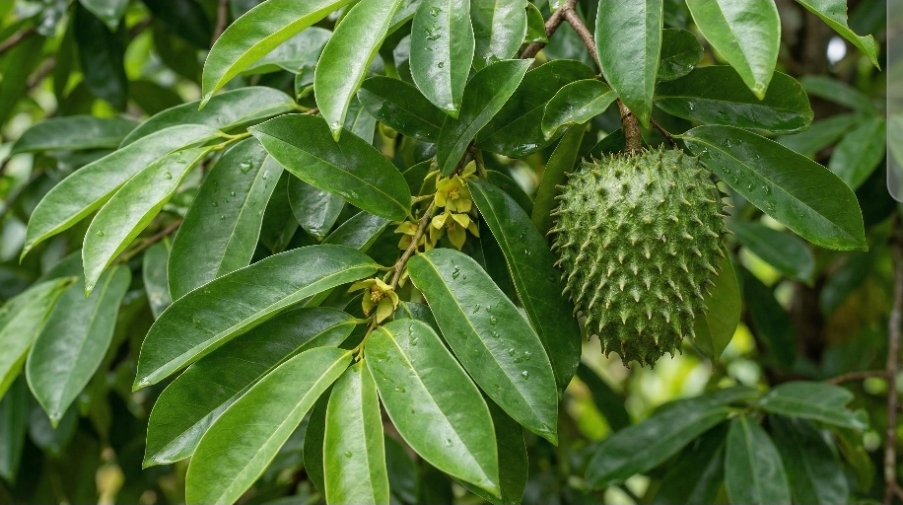
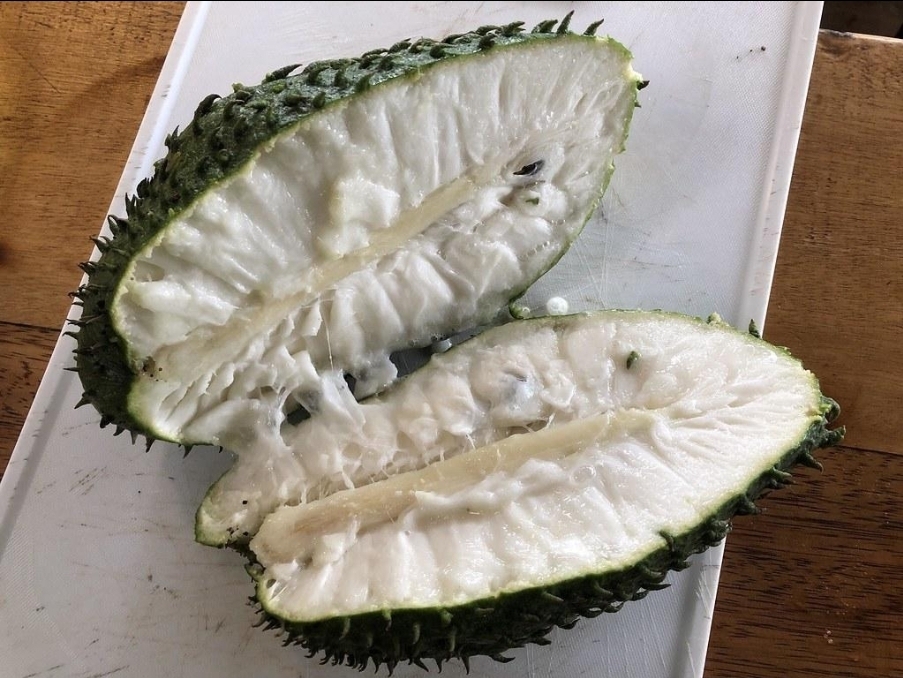
Graviola is the common name for Annona muricata, a tropical evergreen tree belonging to the Annonaceae family.
It is also commonly known as:
Soursop.
Guanabana.
Brazilian paw paw.
Guyabano.
The tree produces a large green fruit covered with soft spines.
Inside, the fruit contains soft white pulp with a distinctive sweet and acidic flavour.
The fruit is consumed in various parts of the world in:
Fresh fruit.
Juices.
Smoothies.
Desserts.
Traditional foods.
Other parts of the plant, particularly the leaves, have also been used in traditional herbal preparations.
However, consuming the fruit as a food is not equivalent to consuming concentrated leaf extracts or supplements.
The concentration and composition of biologically active compounds can differ substantially between different parts of the plant and different preparations.
What does Graviola naturally contain?
Graviola contains a variety of naturally occurring plant compounds.
These include:
Polyphenols.
Flavonoids.
Alkaloids.
Annonaceous acetogenins.
Other phytochemicals.
The edible fruit also provides nutrients as part of its natural food matrix.
Scientific interest has focused particularly on acetogenins because some of these compounds demonstrate substantial biological activity in experimental studies.
However, biological activity can potentially produce both beneficial and harmful effects.
The presence of active phytochemicals does not automatically mean that higher doses are healthier.
What are annonaceous acetogenins?
Annonaceous acetogenins are naturally occurring compounds found primarily in plants belonging to the Annonaceae family.
They have attracted scientific interest because some acetogenins can interfere with cellular energy production.
Laboratory experiments have demonstrated cytotoxic effects against several types of cells, including cancer cell lines.
This has contributed to graviola's reputation as a possible anticancer botanical.
However, the same ability to interfere with cellular energy metabolism also raises questions about toxicity.
Cells throughout the body require mitochondrial energy production.
Therefore, a compound capable of interfering with cellular energy processes cannot automatically distinguish between harmful cells and healthy tissues under all circumstances.
This is one reason why laboratory anticancer activity alone cannot establish that a substance is a safe cancer treatment.
What is annonacin?
Annonacin is one of the best-known acetogenins associated with plants from the Annonaceae family.
It has been investigated extensively because of its biological activity.
Experimental research indicates that annonacin can interfere with mitochondrial energy production.
This mechanism has generated interest in cancer research but has also raised concerns regarding nerve cells.
Certain neurons are particularly dependent on continuous energy production.
Laboratory and animal studies have demonstrated neurotoxic effects associated with annonacin exposure.
A European risk assessment identified annonacin as an important acetogenin in Annona muricata and highlighted major gaps in the human safety evidence for concentrated supplements.
Graviola and antioxidant activity
Graviola contains plant compounds with antioxidant properties.
Antioxidants interact with reactive molecules commonly described as free radicals.
Normal metabolism naturally generates reactive oxygen species.
The body manages these through an extensive antioxidant defence system involving:
Enzymes.
Dietary nutrients.
Endogenous antioxidants.
Plant-derived compounds.
Laboratory research has demonstrated antioxidant activity in extracts of Annona muricata.
However, laboratory antioxidant activity does not automatically mean that taking concentrated graviola supplements produces a clinically meaningful antioxidant effect in humans.
From a naturopathic perspective, antioxidant support is generally better approached through an overall dietary pattern rich in:
Vegetables.
Fruits.
Herbs.
Spices.
Nuts.
Seeds.
Legumes.
Graviola fruit may contribute to this broader dietary diversity when consumed as food.
Graviola and inflammation
Inflammation is a normal biological response involved in immune defence and tissue repair.
Problems can arise when inflammatory processes become excessive, inappropriate or persistently activated.
Experimental studies have investigated graviola extracts for anti-inflammatory activity.
Animal models have demonstrated anti-inflammatory and analgesic effects, with proposed mechanisms involving inflammatory pathways such as COX-related signalling.
These findings are scientifically interesting.
However, they do not establish graviola as a clinically proven treatment for inflammatory diseases in humans.
Human clinical trials are required before therapeutic conclusions can be made.
Graviola and immune health
Graviola is sometimes marketed as an "immune booster."
This phrase requires caution.
The immune system is an extremely complex network involving:
White blood cells.
Antibodies.
Cytokines.
Lymphatic tissues.
Bone marrow.
Barrier tissues.
Numerous regulatory mechanisms.
Healthy immune function depends on appropriate regulation rather than simply making the immune system more active.
There is currently insufficient clinical evidence to conclude that graviola supplementation meaningfully improves immune function in healthy humans.
From a naturopathic perspective, the foundations of immune health remain:
Adequate nutrition.
Sufficient protein.
Appropriate micronutrient intake.
Regular sleep.
Physical activity.
Stress management.
Avoiding smoking.
Appropriate medical care and vaccination where indicated.
Graviola and antimicrobial research
Graviola extracts have demonstrated antimicrobial activity in laboratory research.
Studies have investigated effects against certain microorganisms, including bacteria and parasites.
Memorial Sloan Kettering Cancer Center notes that graviola leaf extracts have demonstrated antimicrobial activity in experimental research.
However, laboratory antimicrobial activity does not mean that graviola can replace antibiotics, antifungal medicines or antiparasitic treatment.
The concentration required to inhibit microorganisms in a laboratory may not be achievable or safe inside the human body.
Therefore, infections should be appropriately diagnosed and treated.
Graviola and blood sugar
Graviola has been investigated for potential effects on glucose metabolism.
Animal research has suggested possible glucose-lowering activity.
Proposed mechanisms include antioxidant effects and potential influences on pancreatic beta-cell function and glucose metabolism.
However, reliable human clinical evidence remains limited.
Graviola should not be considered a treatment for diabetes.
This potential glucose-lowering activity also creates an important safety consideration.
People taking diabetes medication could theoretically experience additive glucose-lowering effects.
Memorial Sloan Kettering advises people taking blood-glucose-lowering medication to discuss graviola with their healthcare provider.
Graviola and blood pressure
Animal research has also suggested that graviola may have blood-pressure-lowering effects.
The mechanisms are not fully established in humans.
This means that people taking antihypertensive medication should use caution.
Combining several substances capable of lowering blood pressure could theoretically contribute to:
Dizziness.
Weakness.
Light-headedness.
Excessively low blood pressure.
Memorial Sloan Kettering advises people taking medication for high blood pressure to discuss graviola use with their healthcare provider because additive effects may occur.
Graviola should not replace prescribed antihypertensive treatment.
Graviola and digestive wellbeing
Graviola fruit is a food and can form part of a varied diet.
The fruit naturally provides plant compounds and dietary components within a whole-food matrix.
Traditional herbal practices have also used other parts of the plant for digestive complaints.
Experimental research has investigated possible anti-ulcer activity in animal models.
However, this does not establish graviola supplements as a treatment for:
Gastritis.
Reflux.
Stomach ulcers.
Irritable bowel syndrome.
Inflammatory bowel disease.
Persistent digestive symptoms require appropriate assessment.
Graviola and Cancer Research
Cancer is one of the main reasons graviola has received widespread attention.
Laboratory studies have investigated extracts from graviola leaves, fruit and other plant components against several cancer cell lines.
Experimental research has reported activity involving cell lines associated with:
Breast cancer.
Lung cancer.
Colon cancer.
Prostate cancer.
Pancreatic cancer.
Liver cancer.
Skin cancer.
Proposed mechanisms include changes in:
Cellular energy production.
ATP availability.
Apoptosis.
Cell-cycle regulation.
Growth-factor signalling.
Glucose metabolism.
These laboratory findings are scientifically interesting and may help researchers identify compounds worth studying further.
They do not demonstrate that consuming graviola treats cancer in humans.
Memorial Sloan Kettering states that human studies demonstrating anticancer effectiveness are lacking.
Why killing cancer cells in a laboratory is not the same as treating cancer
Many substances can damage or kill cancer cells when applied directly to them in a laboratory.
The challenge is determining whether a compound can:
Reach the tumour in humans.
Reach an effective concentration.
Remain active inside the body.
Avoid damaging healthy tissue.
Produce meaningful clinical benefits.
Improve survival or quality of life.
Be administered at a safe dose.
These questions require properly designed human clinical trials.
A laboratory experiment cannot answer them by itself.
Therefore, claims that graviola "kills cancer" or "cures cancer" go beyond the available clinical evidence.
Graviola should not replace cancer treatment
Graviola should not be used as a replacement for evidence-based oncology treatment.
Depending on the cancer and individual circumstances, established treatment may include:
Surgery.
Radiotherapy.
Chemotherapy.
Immunotherapy.
Hormone therapy.
Targeted therapy.
Other specialist treatments.
Delaying effective cancer treatment while relying on an unproven herbal product can allow disease progression.
Anyone receiving cancer treatment who wishes to use graviola should discuss it with their oncology team because herbal products may potentially interact with treatment or complicate clinical monitoring.
Graviola and neurological safety
Neurological safety is one of the most important areas of concern surrounding graviola.
Certain acetogenins, particularly annonacin, have demonstrated neurotoxicity in experimental research.
Laboratory studies have shown toxic effects on dopaminergic neurons, while animal research has identified neurological changes after exposure to annonacin or Annona muricata preparations.
Observational studies from the Caribbean have also reported associations between consumption of plants from the Annonaceae family and atypical parkinsonian disorders.
However, observational associations do not prove that graviola directly caused these conditions.
The European risk assessment concluded that causality is difficult to establish from the available observational evidence, while also highlighting the lack of adequate human intervention data for assessing the safety of long-term supplemental exposure.
This uncertainty supports caution rather than reassurance about prolonged high-dose supplementation.
Graviola and Parkinson's Disease
Graviola should not be described as proven to cause Parkinson's disease.
The scientific concern is more specific.
Certain populations with substantial exposure to plants from the Annonaceae family have experienced unusual forms of parkinsonism, and experimental research has demonstrated neurotoxic activity from compounds such as annonacin.
This has generated a plausible scientific concern but not definitive proof that ordinary graviola consumption causes Parkinson's disease.
Nevertheless, people with Parkinson's disease, other movement disorders or neurological conditions should be particularly cautious about concentrated graviola products.
Fruit versus leaf extracts and supplements
It is important to distinguish between eating graviola fruit and taking concentrated herbal preparations.
A whole fruit contains compounds within a natural food matrix.
Supplements may contain concentrated extracts from:
Leaves.
Stems.
Bark.
Fruit.
Combinations of plant parts.
The concentration of acetogenins can vary substantially.
The European risk assessment notes that the composition of Annona muricata preparations may differ depending on plant growth conditions, harvesting, plant part, extraction method and processing.
Therefore, safety findings relating to one preparation cannot automatically be applied to every graviola supplement.
Graviola Tea
Graviola leaf tea is used traditionally in some cultures.
However, "natural tea" does not automatically mean risk-free.
The amount of biologically active compounds extracted into tea can vary depending on:
Number of leaves.
Plant variety.
Brewing temperature.
Brewing duration.
Frequency of consumption.
Growing conditions.
Because long-term exposure to acetogenins remains a safety concern, frequent or prolonged consumption of concentrated graviola leaf tea should not automatically be assumed to be harmless.
Graviola and medication interactions
Reliable human interaction studies are limited.
However, potential interactions deserve consideration because experimental research suggests that graviola may influence blood glucose and blood pressure.
Particular caution may therefore be appropriate with:
Diabetes medication.
Insulin.
Antihypertensive medication.
Memorial Sloan Kettering identifies potential additive effects with antidiabetic and antihypertensive medicines, although the clinical significance has not been fully established.
Anyone taking regular medication should discuss concentrated graviola products with a pharmacist or healthcare professional before use.
Graviola and medical imaging
An unusual potential consideration involves certain nuclear medicine imaging procedures.
Animal research has suggested that graviola can alter the biodistribution of radiopharmaceuticals.
Memorial Sloan Kettering therefore advises avoiding graviola when undergoing imaging tests such as PET scans because it may affect test results.
Patients undergoing specialist imaging should disclose all herbal supplements they use.
Graviola during pregnancy and breastfeeding
Reliable safety evidence for concentrated graviola supplements during pregnancy and breastfeeding is insufficient.
Pregnancy is not an appropriate period for experimenting with concentrated botanical preparations that have limited reproductive and neurological safety data.
The same principle applies during breastfeeding.
The fruit consumed as a normal food and concentrated medicinal extracts represent different exposure levels.
Professional advice should be obtained before using graviola supplements during pregnancy or breastfeeding.
Potential side effects and safety concerns
Human safety information remains incomplete.
Potential concerns include:
Gastrointestinal effects.
Blood-pressure reduction.
Blood-glucose reduction.
Possible medication interactions.
Neurological toxicity with certain compounds or exposure patterns.
Uncertainty surrounding long-term concentrated supplementation.
A systematic review published in 2020 concluded that available studies suggested a generally favourable safety and tolerability profile for Annona muricata leaf extract, but also acknowledged neurotoxic findings and the need for further research.
At the same time, European risk assessment work has highlighted substantial data gaps that prevent confident assessment of long-term high-dose supplement exposure.
These findings are not necessarily contradictory.
They indicate that short-term observations may appear reassuring while long-term safety remains insufficiently established.
Graviola in a naturopathic approach
From a naturopathic perspective, graviola should be approached according to the principles of individualisation, appropriate dosing, evidence and safety.
The question should not simply be:
"Is graviola good for you?"
A more useful assessment considers:
- Why the person wants to use it.
- Which part of the plant is being used.
- Whether it is food, tea or concentrated extract.
- Dose.
- Frequency.
- Duration.
- Existing health conditions.
- Medication.
- Neurological history.
- Blood pressure.
- Blood-glucose control.
- Other supplements.
Using a plant medicinally requires greater consideration than occasionally consuming its fruit as food.
Graviola should not replace the foundations of health
No botanical supplement can replace the fundamental determinants of long-term health.
These include:
- A varied diet.
- Vegetables and fruits.
- Adequate protein.
- Appropriate fibre intake.
- Healthy dietary fats.
- Regular physical activity.
- Sufficient sleep.
- Stress management.
- Avoiding smoking.
- Appropriate alcohol intake.
- Preventive healthcare.
- Appropriate medical treatment when required.
Graviola may be an interesting botanical, but it should not become the centre of an individual's health strategy.
Practical considerations for using Graviola
From a naturopathic and evidence-informed perspective, consider the following:
- Distinguish normal fruit consumption from concentrated supplementation.
- Do not assume that natural means harmless.
- Avoid claims that graviola cures cancer.
- Do not replace cancer treatment with graviola.
- Be cautious with prolonged or high-dose use.
- Consider the potential neurological concerns associated with annonacin.
- Check which part of the plant a supplement contains.
- Check the concentration and extraction method where available.
- Discuss use with a healthcare professional if taking diabetes medication.
- Discuss use if taking blood-pressure medication.
- Disclose graviola use before specialist medical imaging.
- Seek professional advice during pregnancy or breastfeeding.
- Exercise particular caution in people with neurological or movement disorders.
- Do not use graviola as a replacement for a balanced diet.
- Remember that evidence from cells and animals does not automatically demonstrate effectiveness in humans.
Graviola is a fascinating tropical plant with a long history of food and traditional herbal use.
Modern scientific research has identified numerous biologically active compounds within Annona muricata, including polyphenols, alkaloids and annonaceous acetogenins.
Laboratory and animal research has generated interest in potential antioxidant, anti-inflammatory, antimicrobial, metabolic and anticancer properties.
However, scientific interest should not be confused with established clinical effectiveness.
This distinction is especially important regarding cancer.
Although graviola extracts have demonstrated activity against several cancer cell lines in laboratory research, reliable human clinical evidence showing that graviola treats or cures cancer is lacking.
Safety also deserves equal attention.
Annonacin and related acetogenins have demonstrated neurotoxic activity experimentally, and observational studies have raised concerns about possible associations between long-term exposure to Annonaceae plants and atypical movement disorders. Causality remains uncertain, but long-term high-dose supplement safety has not been adequately established.
From a naturopathic perspective, this illustrates an important principle: natural substances can possess genuine biological activity, but biological activity can produce both potential benefits and potential risks.
Graviola fruit can be considered within the broader context of dietary variety.
Concentrated leaves, extracts, teas and supplements require greater caution.
Responsible integrative health practice means evaluating the quality of evidence, distinguishing traditional use from proven clinical effects, considering medication interactions and avoiding exaggerated therapeutic claims.
Graviola is therefore best understood as an interesting botanical requiring further research rather than as a proven treatment for serious disease.
Frequently asked questions
- What Is Graviola?
- Graviola is the tropical plant Annona muricata. Its fruit is commonly known as soursop or guanabana. The fruit is eaten as food, while leaves and other parts of the plant have been used in traditional herbal practices.
- Is Graviola the Same as Soursop?
- Yes. Soursop is the common English name for the fruit of Annona muricata. Graviola and guanabana are other commonly used names.
- What Are the Benefits of Graviola?
- Laboratory and animal research has investigated antioxidant, anti-inflammatory, antimicrobial, glucose-lowering and other biological effects. However, human clinical evidence for most therapeutic uses remains limited.
- Is Graviola Rich in Antioxidants?
- Graviola contains plant compounds with antioxidant activity. Laboratory studies have demonstrated antioxidant properties in graviola extracts. However, this does not prove that concentrated supplementation provides major clinical benefits in humans.
- Does Graviola Boost the Immune System?
- There is insufficient clinical evidence to conclude that graviola supplementation meaningfully "boosts" immunity in humans. Immune function is complex and depends on many nutritional, physiological and lifestyle factors.
- Does Graviola Reduce Inflammation?
- Experimental studies suggest anti-inflammatory activity. However, sufficient human clinical evidence is not available to recommend graviola as a treatment for inflammatory disease.
- Does Graviola Lower Blood Sugar?
- Animal studies suggest potential glucose-lowering effects. Human evidence is insufficient to use graviola as a diabetes treatment. People taking glucose-lowering medication should use caution because additive effects are possible.
- Does Graviola Lower Blood Pressure?
- Animal research suggests possible blood-pressure-lowering effects. Human clinical evidence remains limited. People taking antihypertensive medication should discuss supplementation with a healthcare professional.
- Does Graviola Kill Cancer Cells?
- Some graviola extracts and compounds have demonstrated cytotoxic activity against cancer cells in laboratory studies. This is not equivalent to proving that graviola treats cancer in humans.
- Does Graviola Cure Cancer?
- There is currently no reliable clinical evidence demonstrating that graviola cures cancer. It should not replace evidence-based oncology treatment.
- Is Graviola Safe Every Day?
- The safety of long-term daily consumption of concentrated graviola extracts has not been adequately established. Concerns regarding annonacin and neurological toxicity make prolonged high-dose use particularly difficult to justify without professional oversight.
- Is Graviola Fruit Safe?
- Graviola fruit is traditionally consumed as food. Food consumption and concentrated supplementation are different exposures. The available concerns are particularly relevant when considering repeated or concentrated intake of plant extracts and long-term exposure.
- Is Graviola Leaf Tea Safe?
- Occasional traditional use is different from prolonged concentrated intake. The concentration of active compounds in leaf tea can vary, and long-term safety is insufficiently established.
- Can Graviola Cause Parkinson's Disease?
- It has not been proven that graviola causes Parkinson's disease. However, observational research has identified associations between high exposure to Annonaceae plants and atypical parkinsonism, while annonacin has demonstrated neurotoxicity experimentally. This is why caution with prolonged concentrated exposure is appropriate.
- Can I Take Graviola With Medication?
- Potential interactions may occur, particularly with medicines that lower blood sugar or blood pressure. People taking regular medication should discuss graviola supplements with a pharmacist or healthcare professional.
Important Disclaimer: This article is provided for general educational and informational purposes only. It is not intended to diagnose, treat, cure or prevent any medical condition and should not replace advice from a doctor or appropriately qualified healthcare professional. Supplements and natural products may cause side effects or interact with prescription medicines. Always seek appropriate professional advice before starting a new supplement or treatment, particularly if you have an existing medical condition or take medication.
References
- Chan WJ, McLachlan AJ, Hanrahan JR, Harnett JE. The safety and tolerability of Annona muricata leaf extract: a systematic review. Journal of Pharmacy and Pharmacology. 2020;72(1):1–16. https://pubmed.ncbi.nlm.nih.gov/31659754/
- European Food Safety Authority (EFSA). Risk assessment of Annona muricata. European Food Risk Assessment Fellowship Programme. https://www.efsa.europa.eu/sites/default/files/corporate_publications/files/200907-eu-fora-series-3.pdf
- Memorial Sloan Kettering Cancer Center. Graviola. About Herbs, Botanicals & Other Products. https://www.mskcc.org/cancer-care/integrative-medicine/herbs/graviola